MON sem Paredes – Arte ao Ar Livre
3ª edição
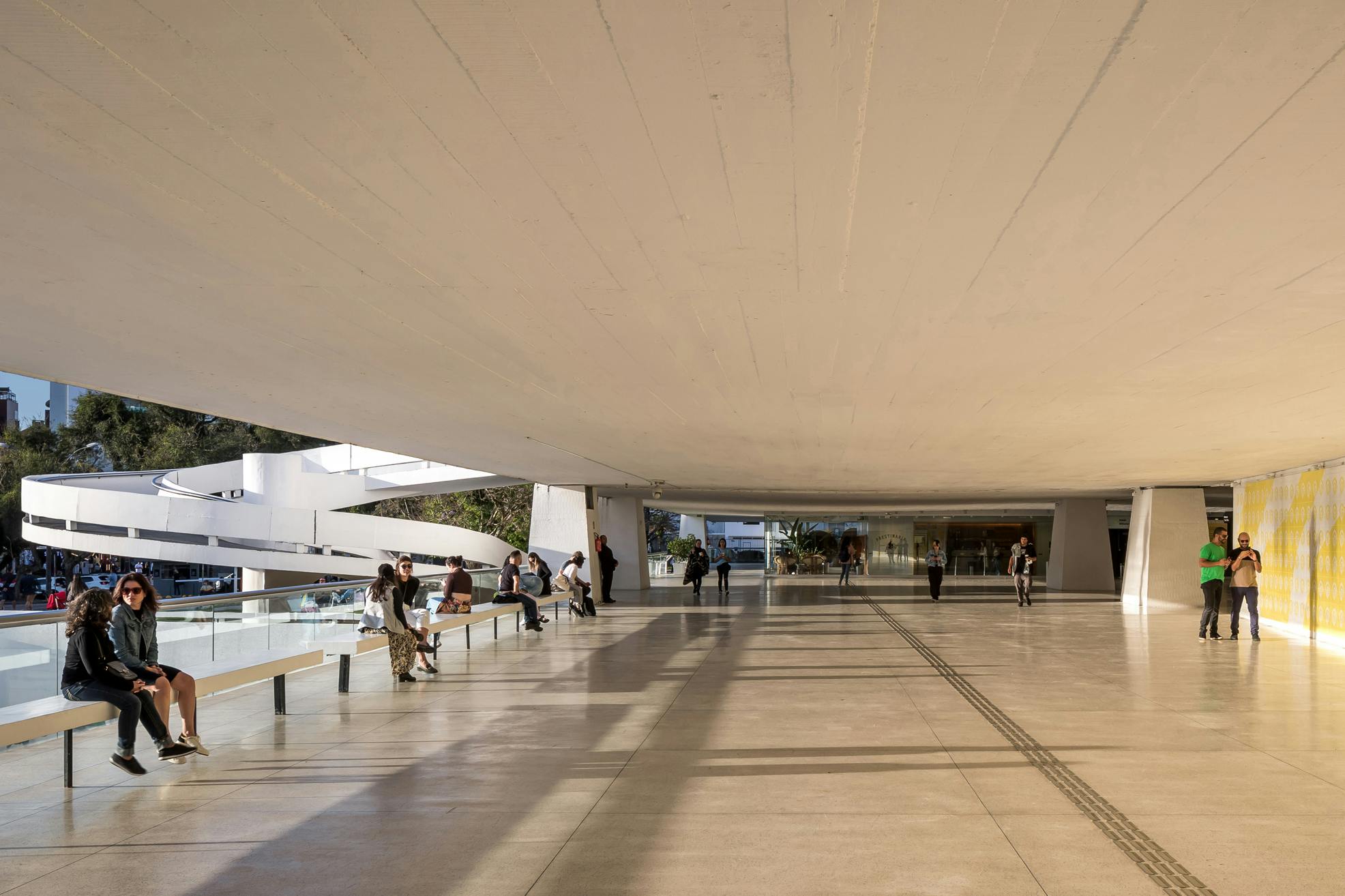
Uma nova edição do “MON sem Paredes – Arte ao Ar Livre” acaba de ser entregue ao público. Desta vez, a área externa do Museu Oscar Niemeyer passa a abrigar mais quatro grandiosas obras: a escultura Aurum, da artista Rizza Bomfim; as Bancas Galerias, das artistas Mavi Morais, Maria Lynch, Atransälien e Yohana Oizumi; a escultura de Avaf (Assume Vivid Astro Focus), e o Robô Interativo dos arquitetos Dilva e Orlando Busarello. A curadoria é de Marc Pottier.
Artist
Alexandre Vogler , Artur Lescher , ATRANSÄLIEN, AVAF, Gustavo Utrabo , Narcélio Grud , Maria Lynch, Mavi Morais, Orlando Busarello, Rizza, Rommulo Conceição e Yohana Oizumi
Curatorship
Marc Pottier
Abertura
28 de novembro de 2025, 20h
Exhibition period
From 29 de novembro de 2025
Long term
Location
Parcão
Plan your visit
SAIBA MAIS SOBRE A EXPOSIÇÃO
Museu Oscar Niemeyer realiza nova edição do “MON sem Paredes”
O Museu Oscar Niemeyer entrega ao público uma nova edição do “MON sem Paredes – Arte ao Ar Livre”. A curadoria é de Marc Pottier e a inauguração será no dia 28 de novembro, às 17h.
Democrático e inclusivo, o projeto – inaugurado em 2024 – rompeu o limite físico das paredes do Museu e abraçou a população. A iniciativa se transformou num convite permanente para que o público externo se inspire e sinta-se instigado a entrar no MON.
Nesta nova edição, quatro grandiosas obras são entregues à população. São elas: a escultura "Aurum", da artista Rizza Bomfim; as Bancas Galerias, das artistas Mavi Morais, Maria Lynch, Atransälien e Yohana Oizumi; a escultura de Avaf (Assume Vivid Astro Focus), e o "Robô Interativo" dos arquitetos Dilva e Orlando Busarello, que resgata a memória afetiva de uma Curitiba de décadas atrás, quando a obra teve longa permanência no Centro da cidade, na Praça Osório.
Ao realizar uma nova edição do “MON sem Paredes – Arte ao Ar Livre” o Museu Oscar Niemeyer cada vez mais utiliza a sua área externa como uma grande área de convivência voltada à arte.
Em consonância com o movimento da cidade de oferecer mais atrativos na região central, transformamos o entorno do Museu num amplo espaço cultural. Dessa forma, alcançamos cada vez mais pessoas, sejam moradores ou visitantes, fazendo com que a região respire arte.
Entendemos que a arte no espaço público proporciona uma variedade de atividades interativas que nem sempre uma exposição museológica possibilita. Ao criar uma área urbana voltada à cultura, o ‘MON sem Paredes’ permite muitas outras formas de expressão da criatividade artística.
O curador explica que o MON sempre quis trabalhar para ampliar seu público e oferecer muitas propostas que possam fazer com que os curitibanos e paranaenses se apropriem do Museu. “Por isso foi criado o importante projeto ‘MON sem Paredes”, diz Pottier.
Ele lembra que a iniciativa, na edição anterior, já aproximou os visitantes de artistas como Gustavo Utrabo, Mariana Palma, Artur Lescher, Rômmulo Conceição, Alexandre Vogler, Narcélio Grud e Joana Vasconcelos.
Marc Pottier também fala sobre os objetivos do projeto. “O MON trabalha para ampliar seu público e oferecer muitas propostas que possam fazer com que os curitibanos e paranaenses se apropriem do ‘seu’ Museu. Por isso, o ‘MON sem Paredes’ é tão importante”, comenta.
Images

Foto: Marcello Kawase

Foto: Marcello Kawase

Foto: Marcello Kawase

Foto: Marcello Kawase

Foto: Marcello Kawase
Foto: Marcello Kawase
Foto: Marcello Kawase
Foto: Marcello Kawase
Foto: Marcello Kawase
Foto: Marcello Kawase
Foto: Marcello Kawase
Materiais da Exposição


Giroscópico, 2022 - Audiodescrição
Mais do que nunca, a arte no espaço público se destaca como uma das melhores maneiras de levar arte ao público. Convidar artistas para criar obras, instalações ou esculturas utilizando os espaços dos jardins, parques e praças também permite uma variedade de atividades interativas que nem sempre uma exposição museológica permite.
O MON sempre buscou para ampliar seu público e oferecer muitas propostas que possam fazer com que os curitibanos e paranaenses se apropriem do “seu” Museu. Por isso foi criado o importante projeto “MON sem Paredes – Arte ao Ar Livre”.
Desde a criação do projeto, o Museu Oscar Niemeyer já aproximou o visitante de artistas como Gustavo Utrabo, Mariana Palma, Artur Lescher, Rômmulo Conceição, Alexandre Vogler, Narcélio Grud, Joana Vasconcelos, Rizza Bomfim, Mavi Morais, Maria Lynch, Atransälien, Yohana Oizumi, Avaf, Dilva e Orlando Busarello.
Ao criar ligações entre os espaços exteriores e as salas expositivas do Museu, este novo projeto permite mostrar outras formas de expressão da criatividade artística, bem como apresentar projetos para variados públicos, incluindo todas as gerações de famílias. Trabalhar ao ar livre também permite dimensões ilimitadas de obras, percursos e jogos em que todos serão bem-vindos, sem restrições de tempo.
Marc Pottier
Curador
Ao realizar uma nova edição do “MON sem Paredes – Arte ao Ar Livre” o Museu Oscar Niemeyer cada vez mais utiliza a sua área externa como uma grande área de convivência voltada à arte – um presente à população.
Em consonância com o movimento da cidade de oferecer mais atrativos na região central, transformamos o entorno do Museu num amplo espaço cultural. Dessa forma, alcançamos cada vez mais pessoas, sejam moradores ou visitantes, fazendo com que a região respire arte.
Democrático e inclusivo, o projeto – inaugurado em 2024 – rompeu o limite físico das paredes do Museu e abraçou a população. A iniciativa se transformou num convite permanente para que o público externo se inspire e sinta-se instigado a entrar no MON.
Na mais recente edição, quatro grandiosas obras foram entregues à população. São elas: a escultura "Aurum", da artista Rizza Bomfim; as "Bancas Galerias", das artistas Mavi Morais, Maria Lynch, Atransälien e Yohana Oizumi; a escultura de Avaf (Assume Vivid Astro Focus), e o "Robô Interativo" dos arquitetos Dilva e Orlando Busarello, que resgata a memória afetiva de uma Curitiba de décadas atrás, quando a obra teve longa permanência no Centro da cidade, na Praça Osório.
Elas se juntam ao conjunto de obras anteriores, que ocupa a área externa do MON e que conta com trabalhos de artistas como Gustavo Utrabo, Artur Lescher, Rômmulo Conceição, Alexandre Vogler, Narcélio Grud e Joana Vasconcelos.
Entendemos que a arte no espaço público proporciona uma variedade de atividades interativas que nem sempre uma exposição museológica possibilita. Ao criar uma área urbana voltada à cultura, o “MON sem Paredes – Arte ao Ar Livre” permite muitas outras formas de expressão da criatividade artística.
Museu Oscar Niemeyer
GUSTAVO UTRABO
Acervo Museu Oscar Niemeyer.
O “Semeador” propõe uma reflexão sobre a vida e a passagem do tempo, através de um percurso elevado no solo que conecta o MON ao jardim. Construído a partir da repetição modular do piso projetado por Oscar Niemeyer, o trabalho busca borrar os limites entre o construído e o natural, ao misturar sementes típicas do Paraná com o cimento.
O caminho leva o visitante à obra “Ao Redor de uma Árvore”, criação que se materializa como um gesto de cuidado. Com uma estrutura metálica envolve o caule e aproxima o visitante da copa em um aceno de respeito. A sustentação no chão é feita por quatro pilares finos, em referência a uma fala do filósofo Ailton Krenak, que diz: pisar suavemente sobre a terra é o que se busca.
Orientações de uso:
- Acesso livre.
- Número máximo de pessoas: 20.
- Evite o uso em dias de chuva.
- Não é permitido subir na árvore.
ALEXANDRE VOGLER
Maçaranduba | Coleção do artista.
Acervo Museu Oscar Niemeyer.
A “Maca de Guarda” convida o visitante a se deitar sobre a superfície inclinada a 40°, com o corpo voltado para o céu. A proposta dialoga com a prática lúdica de criar imagens de anjo na neve, ao abrir braços e pernas, referência que complementa o título da obra.
O termo Maleme, do vocabulário afro-brasileiro, significa súplica, misericórdia ou ajuda, dirigida aos orixás, especialmente ao orixá Xangô. A posição do corpo, com o plexo e as pernas abertos e voltados ao alto, sugere uma orientação ecumênica e divina.
Orientações de uso:
- Acesso livre.
- Número máximo de pessoas: 1 pessoa por vez.
NARCÉLIO GRUD
Escultura em fibra de vidro com pintura em PU e arcos em aço inox
Acervo Museu Oscar Niemeyer
A obra propõe ser uma escultura e mobiliário de escalada, similar aos equipamentos de lazer encontrados em áreas de recreação infantil e parques públicos. Com uma composição circular em que o raio, o diâmetro e o centro se expandem de um globo para aros entrelaçados, formando uma espécie de cosmos das rotas órbitas planetárias, convida o visitante a perceber a arte por meio de novas aproximações do público com a escultura.
Orientações de uso:
- Crianças abaixo de 8 anos devem ser supervisionadas por um adulto.
- Não é permitida a utilização por pessoas com mais de 14 anos.
- Evite o uso em dias de chuva.
- Em dias quentes, a estrutura absorve o calor. Use com cautela.
JOANA VASCONCELOS
Ferro forjado, plantas de jasmim
Série de 5 versões únicas + 5 PA
Acervo Museu Oscar Niemeyer
A escultura “Té Danzante (PA)” produzida em ferro forjado, no formato de um bule de chá, cria conexões entre o natural e o industrial. Nas grades de ferro que dão forma ao bule apresenta padrões característicos das cercas e balaustradas que podem ser observadas em diferentes paisagens urbanas e rurais. A obra assume a forma de uma escultura-árvore que dialoga com o princípio de complementaridade e simbiose entre o natural e o industrial.
Orientações de uso:
- Acesso livre.
- Número máximo de pessoas: 6.
- Evite o uso em dias de chuva.
- Em dias quentes, a estrutura absorve o calor. Use com cautela.
- Não é permitido subir na estrutura.
ROMMULO CONCEIÇÃO
Metal, vidro, concreto e pintura automotiva policromada
3° trabalho da série ‘’Estruturas Dissipativas” Acervo Museu Oscar Niemeyer
Obra desenvolvida pelo projeto “O Pequeno Colecionador”
Acervo Museu Oscar Niemeyer
A obra “Estruturas Dissipativas” é composta por duas estruturas metálicas a partir de um eixo perpendicular em uma plataforma central, uma chapa de vidro com altura de 3,5 metros atravessa a plataforma e estabelece um plano falso de simetria. Produzida em ferro e concreto montada de forma a dar acesso ao público, que poderá utilizá-lo a partir de suas próprias referências e experimentações.
Orientações de uso:
- Crianças abaixo de 8 anos devem estar acompanhadas de um adulto.
- Número máximo de pessoas: 2 adultos ou 3 crianças na parte aérea.
- Carga máxima: 200 kg.
- Evite o uso em dias de chuva.
- Em dias quentes, a estrutura absorve o calor. Use com cautela.
ARTUR LESCHER
Aço inoxidável e aço-carbono
1 / 5 + 2 PA
Acervo Museu Oscar Niemeyer
Obra desenvolvida pelo projeto “O Pequeno Colecionador”
Acervo Museu Oscar Niemeyer
O “Giroscópico” convida o visitante a girar sobre o próprio eixo, movimentando o entorno em uma experiência ao mesmo tempo lúdica e meditativa. A obra pode ser compreendida como um recipiente para o corpo, uma espécie de “metacasa” a partir da qual se observa o mundo. O movimento circular evoca a dança e rituais espirituais associados a outros estados mentais, além de remeter às memórias da infância.
Orientações de uso:
- Crianças abaixo de 8 anos devem estar acompanhadas de um adulto.
- Número máximo de pessoas: 2 adultos ou 3 crianças por vez.
- Carga máxima: 200 kg.
- Evite o uso em dias de chuva.
- Em dias quentes, a estrutura absorve o calor. Use com cautela.
NARCÉLIO GRUD
Esculturas sonoras em fibra de vidro com pintura PU
Acervo Museu Oscar Niemeyer
As obras da série “Sempre em Pé” combinam diferentes conceitos, a partir do brinquedo João Teimoso/Sempre em Pé. Com interações que criam movimento e experiências sonoras, ressignifica o objeto e amplia suas possibilidades de uso, criando um ambiente onde a descoberta e o brincar andam juntos.
Orientações de uso:
- Crianças abaixo de 8 anos devem estar acompanhadas de um adulto.
- Evite o uso em dias de chuva.
- Cuidado ao manusear as obras, evitando atingir pessoas ao redor.
DILVA E ORLANDO BUSARELLO
Aço carbono, aço inox, concreto e pintura policromada – esmalte sintético sobre epóxi
Acervo Museu Oscar Niemeyer
O “Robô Interativo” foi idealizado pelos arquitetos Dilva e Orlando Busarello. O escorregador/robô resgata o imaginário e memória afetiva do público, em uma releitura do icônico brinquedo que esteve por décadas na Praça Osório, no centro de Curitiba. Originalmente concebido em 1971, a pedido do então prefeito Jaime Lerner, o projeto tinha como objetivo oferecer uma área de lazer e convivência para crianças e famílias na região central da cidade.
Orientações de uso:
- Crianças abaixo de 8 anos devem estar acompanhadas de um adulto.
- Número máximo de pessoas: 1 criança por vez na escada, 5 crianças na parte alta e 1 criança por vez em cada ‘’braço’’ do escorregador.
- Carga máxima: 300 kg.
- Evite o uso em dias de chuva.
- Em dias quentes a estrutura absorve calor. Use com cautela.
- Não é permitido escalar na estrutura.
RIZZA BOMFIM
Fundição em latão
Coleção Rizza Furletti Bomfim
Acervo Museu Oscar Niemeyer
A escultura “Aurum”, da artista mineira Rizza Bomfim, apresenta curvas reflexivas que convidam o público a circular, atravessar e interagir. A artista trabalha com interferências no ambiente, pensando suas obras como joias urbanas, que não adornam somente o corpo, mas também o espaço.
Orientações de uso:
- Em dias quentes a estrutura absorve calor - Não toque.
- Não é permitido subir na obra.
AVAF
Madeira, aço, EPS, fibra de vidro, pintura automotiva e cordas
Acervo Museu Oscar Niemeyer
Próximo ao Giroscópico, a obra “Afenufu vivalulu amulufu fufulufu” é uma escultura autoportante com escorregador, balanço e outros elementos para interação das crianças.
Orientações de uso:
- Acesso livre.
- Número máximo de pessoas: 6 crianças por vez.
- Uso destinado a crianças de 3 a 12 anos acompanhadas de um adulto.
- Não é autorizado pular, correr ou saltar da escultura.
- Carga máxima: 250 kg.
- Evite o uso em dias de chuva.
- Em dias quentes a estrutura absorve calor. Use com cautela.
MILLA JUNG
Acervo Museu Oscar Niemeyer
Com a proposta de reconstruir um saber histórico entre imagem e observador, o letreiro em neon, “Plas Ayiti”, ilumina a noite e se destaca na paisagem urbana, momento em que, simbolicamente, as diferenças parecem se apagar. A obra aborda as relações entre corpo e lugar, entre habitar e existir em paisagens em constante fluxo. A instalação foi realizada inicialmente para a Praça Tiradentes em Curitiba, fixada no topo do edifício Nossa Senhora da Luz, o projeto neon contextualiza a presença dos imigrantes haitianos em Curitiba, que de 2012 a 2014, definiram a praça como um ponto de encontro e a ela deram o nome em seu idioma.
ALFI VIVERN
Acervo Museu Oscar Niemeyer
A instalação “Passagem”, do artista argentino radicado no Brasil, Alfi Vivern, evoca um trecho do seu conterrâneo, o escritor Jorge Luis Borges, ao dizer que “não sabemos nada, mas podemos imaginar que há uma aventura além da morte.”
SERGIUS ERDELYI
Acervo Museu Oscar Niemeyer
Com cerca de 5,2 metros de altura, a obra do artista Sergius Erdelyi chama a atenção pelo tamanho. É construída cuidadosamente em madeira, a partir da Araucaria angustifolia. Você já viu uma cadeira em proporções tão diferentes?
A “Cadeira do Mestre” (sem data) está localizada no gramado, ao lado do acesso ao estacionamento dos fundos. A escultura instiga a imaginação a criar novas narrativas para esse item do cotidiano.
Sergius Erdelyi (1919-2015) nasceu na cidade de Novi Sad, hoje Sérvia. Foi inventor, empresário, ecologista, filantropo e artista. Seus trabalhos artísticos envolvem esculturas, pinturas, tapeçarias e vitrais.
ELIZABETH TITTON
Acervo Museu Oscar Niemeyer
O que é esta “árvore industrial”? A obra “Palmeira” (2007) integra a série “In Natura”, composta por 37 esculturas em forma de árvores, criadas pela artista a partir de chapas de metal cortadas a laser. O conjunto esteve exposto em 2007 no MON. Nessa série, Elizabeth Titton une arte e indústria, garantindo precisão, qualidade e novas possibilidades para a escultura.
Com obras em bronze, vidro e aço enferrujado e policromado, cada escultura alia a arte à indústria, com o objetivo de criar um contraponto entre o processo industrial e a intenção de obra de arte. A criação resulta em uma peça durável e que reflete a preocupação da artista com o acesso público à arte.
As obras evocam as memórias afetivas da artista e marcam o desenvolvimento de suas experiências com a escultura desde a década de 1970.
Elizabeth Titton nasceu em São Paulo (SP), em 1949, e mudou-se para Curitiba em 1957. É graduada em Administração de Empresas pela Universidade Federal do Paraná (UFPR), formada em Pintura pela Escola de Música e Belas Artes do Paraná, em 1982, onde também foi professora de 1990 a 2006. É Mestre em Educação pela UFPR (2000).
ELIANE PROLIK
Acervo Museu Oscar Niemeyer
“Não Pare de Olhar” faz parte da série “Não Pare Sobre os Olhos”, realizada pela artista Eliane Prolik entre 2003 e 2004. Apropriando-se de placas de sinalização urbana, a artista estimula a reflexão sobre diversos temas pertinentes à civilização, como liberdade, condicionamento, automatismo, alienação, informação e comunicação. “Não Pare de Olhar”, em específico, é um convite para que se leia, mas que ao fazê-lo “não pare sobre os olhos”, ou seja, perceba o que está além do visível.
Eliane Prolik, nascida em Curitiba, em 1960, é graduada em Pintura, com especialização em História da Arte do século XX, pela Escola de Música e Belas Artes do Paraná (EMBAP).
FRANCISCO BRENNAND
Acervo Museu Oscar Niemeyer
A escultura “Pássaro Rocca” (2004), do artista pernambucano Francisco Brennand, é inspirada pelos contos “Simbá, o Marujo” e “Abd al-Rahman, a História do Rocca do Magrebe”, da coleção “As Mil e Uma Noites”.
O animal, que na escultura tem forma sinuosa que se prolonga dos ninhos, é apresentado nas narrativas como um ser gigante, capaz de levantar um elefante, que protege a sua região de invasores. O explorador veneziano Marco Polo também mencionou a ave em seus escritos e acredita-se que o, agora extinto, Aepyornis (ave-elefante) serviu de referência para essa espécie mitológica.
Além do Museu, outras versões da peça de cerâmica vitrificada podem ser encontradas na Oficina Francisco Brennand, em estações de metrô em São Paulo e em prédios do Recife.
Francisco Brennand (1927-2019) nasceu em Recife (PE) e iniciou sua formação artística em 1942, ao receber de Abelardo da Hora (1924-2014) aulas de modelagem. Em 1971, Brennand começou a restaurar uma velha olaria de propriedade paterna, próxima a Recife, transformando-a em atelier e local permanente de exposição, a Oficina Francisco Brennand.
FRANCISCO BRENNAND
Acervo Museu Oscar Niemeyer
A escultura do artista pernambucano Francisco Brennand é um dos destaques no espelho d'água do MON. Produzida com cerâmica vitrificada e com cerca de 4 metros de comprimento e 2 metros de altura, a obra já foi exposta no gramado, no espelho d’água e na área interna e faz parte do acervo do Museu.
Francisco Brennand (1927–2019) começou na pintura, mas foi por influência paterna que ele conheceu a cerâmica. O processo criativo da cerâmica é minucioso, sendo a queima uma das etapas cruciais para a forma das esculturas, em uma relação íntima de criação. Suas peças, como a “Serpente”, assumem espécies de “guardas" de sua “cidadelas”, marcando presença tanto no MON quanto na Oficina Francisco Brennand, no Recife, e outros lugares pelo Brasil.
EDUARDO FROTA
Acervo Museu Oscar
A instalação do artista cearense Eduardo Frota reúne sete peças de 2,84 metros de altura. Além de provocar a curiosidade, as obras convidam o visitante a experimentar os sentidos, entre os vazios e o ritmo cíclico. As estruturas são compostas por anéis de compensado de madeira, unidos por cola e pinos.
Os “Cones” revelam contrastes de tamanho e formas, são construídos com anéis de compensado de madeira, unidos por cola e pinos. De longe, parecem leves e pequenos, porém, ao se aproximar é possível perceber a monumentalidade nos detalhes.
Eduardo Frota nasceu em Fortaleza (CE), em 1959. Mudou-se para o Rio de Janeiro em 1978; nessa cidade iniciou seus estudos de arte frequentando a Escolinha de Arte do Brasil e a Oficina do Corpo de Artes Visuais do Parque Lage. Em 1986 licenciou-se em Educação Artística pelas Faculdades Integradas Bennet. Dedica-se à escultura em grande escala, como cones e carretéis realizados com madeira. Vive e trabalha em Fortaleza.
ELVO BENITO DAMO
Acervo Museu Oscar
“Interferência Ecológica” faz parte de uma série de esculturas iniciada pelo artista Elvo Benito Damo na década de 1970 que tinham como suporte a madeira, o ferro e o cimento. Essas esculturas representavam uma crítica contra o desmatamento e a destruição da natureza.
Desde sua invenção, há mais de cinco mil anos, a roda simboliza o progresso Nesta obra, no entanto, simboliza, o embate entre a madeira e o metal, as consequências desse progresso.
A escultura foi realizada em 1985, a convite do arquiteto paulistano Roberto Luiz Gandolfi, para compor a fachada do Edifício Citibank (1984), permanecendo no local até 2019.
Elvo Benito Damo nasceu em Caçador (SC), em 1948. Após se mudar para Curitiba em 1971, formou-se em Pintura e Licenciatura em Desenho pela Escola de Música e Belas Artes do Paraná e foi aluno de Francisco Stockinger (1919-2009). Está à frente do Atelier Livre de Escultura da Fundação Cultural de Curitiba desde 1976. Suas obras também podem ser vistas em espaços públicos de Curitiba (PR) como as esculturas do Cacique Tindiquera, no Parque Tingui e em frente à Catedral de Curitiba, e o Monumento ao Centenário da Imigração Italiana, em Santa Felicidade
Exposição virtual
O MON está ao lado de grandes museus do Brasil e do mundo na plataforma Google Arts & Culture. Visite nossas exposições em formato virtual.
Conheça mais sobre esta exposição na plataforma Google Arts & Culture.
Access virtual exhibition
Características da exposição

Espaço Físico
Liberdade de movimento

Estímulo Físico
Obra interativa

Estímulo Visual
Luz natural