MON presents an exhibition of the artist Mano Penalva
The exhibition “Moiré Bereguedê – Mano Penalva”, a new project of the Oscar Niemeyer Museum, will open on June 25th at 7 pm in Room 2. It features 71 works, including sculptures, paintings, collages, and videos, from his recent production. The curator is Felipe Scovino.
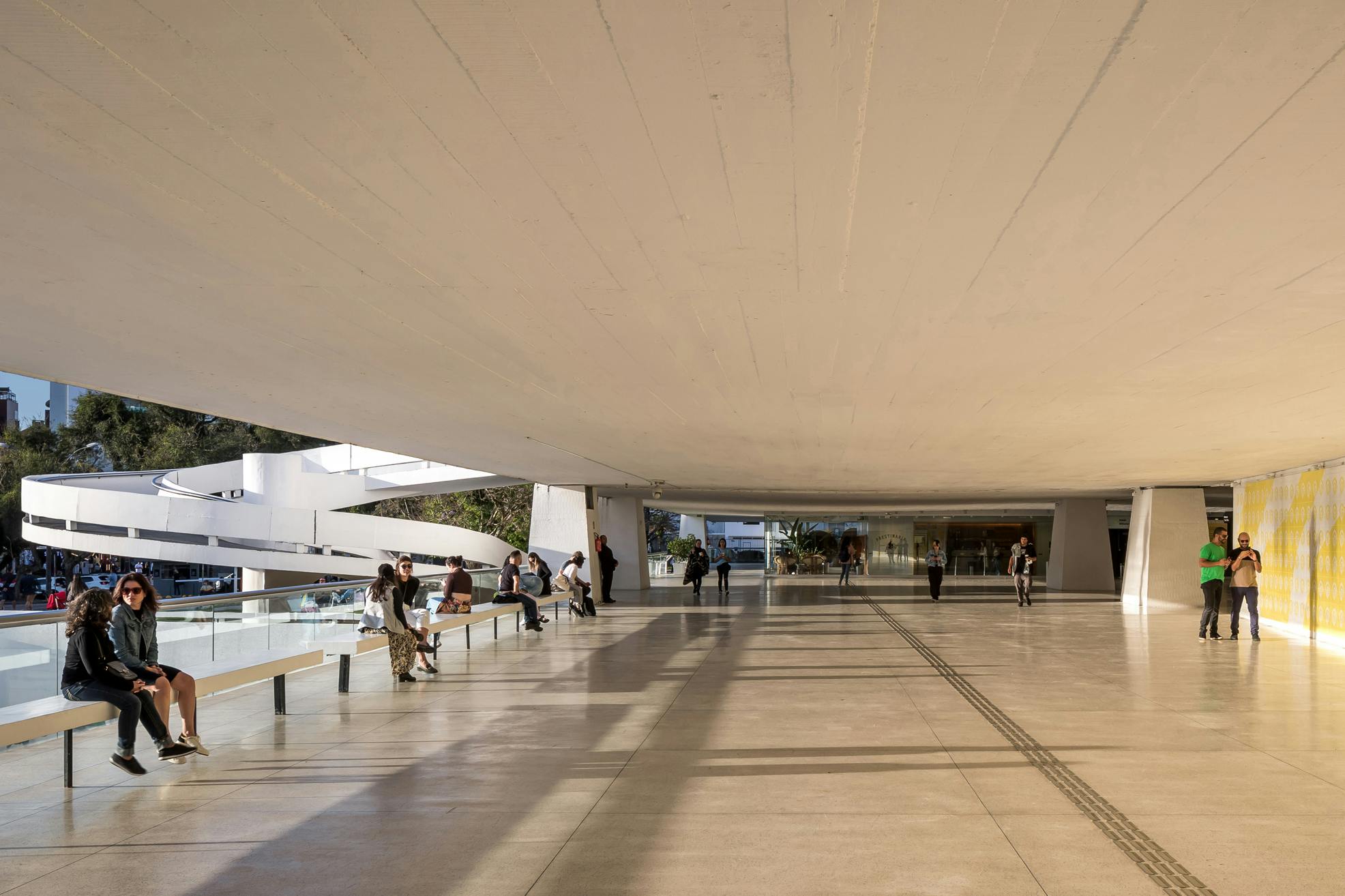
The Oscar Niemeyer Museum is a living and dynamic institution, housed in one of the most beautiful projects designed by the architect of the same name. Upon entering the Museum, visitors always have an immersive experience, since the building itself is a great work of art.
Similarly, in the exhibition ‘Moiré Bereguedê’, Mano Penalva’s work merges and blends in with the space,” Juliana compares. “An installation can be a screen and a drawing functions as a wall. The art hangs from the ceiling and floods the exhibition room, mingling with the people.
Mano Penalva's work stems from the displacement of objects from their everyday context. Through different media such as sculpture, lodgement, painting, photography, and video, the artist invites the public to not only appreciate but also feel his art.
Curatorship
The curator explains that the exhibition's title synthesizes the conciliatory relationship between the vernacular and the industrial, which characterizes Mano Penalva's work. "Moiré is not just an optical effect generated from the overlapping of lines demarcating a grid, but a phenomenon very present in constructivist art in Brazil, particularly from the 1950s onwards," he informs.
Artists such as Hélio Oiticica and Lygia Pape pointed out his orthogonal structure while simultaneously deconstructing it, respectively, in series of works such as “Metaesquemas” (c. 1958) and “Ttéia” (1977–2002). Drawing a parallel with the present, Penalva also performs a similar operation, for example, with the “Nuvens” (Clouds), where the gridbecomes an expansive and malleable three-dimensional plane.
“The word ‘beregedê’ already indicates a place of improvisation, spontaneity, and, significantly, of collectivity and celebration,” says Scovino.
The artist
Mano Penalva was born in Salvador in 1987 and lives and works in São Paulo. His work stems from the displacement of objects from their everyday context and reflects the artist's interest in Anthropology and Material Culture. Through different media, such as sculpture, installation, painting, photography, and video, Penalva proposes new aesthetic groupings based on retail sales strategies, his experiences collecting stories, and observation of the field that moves between the home and the street.
Penalva highlights with his works the idea that the exponential proliferation of objects and images is not intended to train perception or consciousness, but rather insists on merging us with them.
He holds a bachelor's degree in Social Communication from the Pontifical Catholic University of Rio de Janeiro (2008). He attended free art courses at Parque Lage for seven years (2005–2011). Currently, he is part of Massapê Projetos, a platform managed by artists that enables artistic thought and production, based in São Paulo, and of which he is the creator.
In recent years, she has participated in several artistic residencies: Casa Wabi – Puerto Escondido (Mexico), 2021; Fountainhead Residency – Miami (USA), 2020; LE26by / Felix Frachon Gallery – Brussels (Belgium), 2019; AnnexB – New York (USA), 2018; Penthouse Art Residence – Brussels (Belgium), 2018; R.A.T. – Artistic Exchange Residency – Mexico City (Mexico), 2017; Pop Center – CamelódromoPorto Alegre (Brazil), 2017.